Tuesday, June 21, 2011

Sunscreen Regulations

Last week, the FDA changed their guidelines for how sunscreens can be labeled regarding their claims to be sweatproof or waterproof, the SPF factors they can list, and whether they can claim to offer broad spectrum protection (against both UVA and UVB rays) based on testing standards. These changes have been in the works for decades, and represent a major improvement in how companies present their products to consumers.

Even so, the Environmental Working Group, a consumer advocacy agency, had circulated a petition asking for tougher standards, particularly the banning of sunscreen ingredients that may be carcinogens, affect reproductive organs, or act as toxins to the body. Every year, they publish a guide to sunscreen ingredients, and a list of brands that are deemed the safest as well as those that are labeled “worst offenders.” 


You can access their 2012 sunscreen database here and look up your brand.

I’m concerned about the ingredients in many of the products my family and I use, particularly since many chemicals in cosmetic and beauty products have not been tested for safety, especially in combination with others, and because many products contain chemicals known to cause cancer. You can watch a short video titled “The Story of Cosmetics” here to learn more about this. I’ve consulted the EWG’s sunscreen database for two years now, and I signed their petition mentioned above. They plan to continue this work, and I plan to keep signing petitions and using their database until all the products on the shelf are safe.

Whenever I talk to my students about the chemicals in beauty products, they always want to know what brand I use. I urge you to do your own research to find the best products for your family, but I will tell you which sunscreens I use and why. Two of the safest types of sunscreens are the minerals titanium dioxide and zinc oxide. I only consider products with these active ingredients. My other criteria are: natural inactive ingredients and as few ingredients as possible. This year, the only products that meet these criteria are made by W. S. Badger Co. I use Badger SPF 30 Sunscreen For Face & Body 2.9 oz (87 ml) cream and Badger All Natural, All Season Face Stick, Sunscreen, SPF 30, Unscented .65 oz (18.4 g). These products are more expensive than the more familiar brands that you can find at almost any store, and they may only be available to you on-line. Given the toxicity ratings of the familiar products, I consider the extra expense and trouble worth it. FYI: these tubes are small, so buy more than one.

You may be wondering if these products work. Yes. Like most sunscreens, you need to reapply after 2 hours or spending time in the water. My children are getting good tans this year, but they have not burned. Also, I’ve heard that these products are sold out at a few on-line retailers, so I’m not the only one who thinks they are worth buying. If you can’t find them anywhere, you can try Jason Natural Cosmetics Sunbrellas MINERAL Natural Sunblock, SPF 30 4 oz (113 g); my friend Jen uses this one because her children don’t like the greasy feel of the Badger cream. My girls don’t seem bothered by it, but the Badger cream is oiler than most standard sunscreen products.

Sometime soon, I’ll write about which foods can help you increase the SPF factor of your own skin. Back in the days before sunscreen, people relied on a healthy diet, a big hat, and clothing that covered to protect them from the sun. That was before we tore a hole in the protective ozone layer, of course. Also, consider going without sunscreen if you will only be outside ten or fifteen minutes. When exposed to sunlight, your upper body makes vitamin D, and most Americans do not have adequate levels for immune system function and building bones. Some researchers believe that less people would become ill if all of us had proper levels of vitamin D.

Tuesday, June 14, 2011

MyPlate.gov

The food pyramid is out, and My Plate is in. This change is part of Michelle Obama’s program against child obesity, and is a welcomed new tool in that arsenal, given the confusing incarnations of the food pyramid in recent years.

What I like about the plate is that it places less emphasis on meat and seafood as protein sources, at least in the plate graphic itself. Rather than discuss what I don’t like, I’ll refer you to two Los Angeles Times opinion articles that do a good job of summing up how it could be better. This article discusses the disparities between what Americans usually eat and what the plate suggests, or should suggest, we eat. This one does a good job of presenting the opinions of others and their reasoning behind them.

How do children, the primary target, react to My Plate? I printed out the coloring sheet available here for my daughters. Once I clarified which foods were grains and which ones were proteins, my 6 year old colored her plate. As you can see, she already knows how to fill her plate with healthy choices based on the categories provided on the plate. You may have noticed she changed the glass of dairy to orange juice; probably not the best choice, given all the sugar, but a good source of vitamin C. I could write for days about why my children drink very little cow’s milk, but I’ll save that for another post. In any case, I think kids will adjust easily to lessons about what to put on a plate at each meal using this graphic. If you try it with your family, let me know how it turns out.

If you’ve explored the web site, you’ll see the new food groups for My Plate: grains, vegetables, fruits, protein, dairy. Here’s the list of food groups I teach to my students, based on the research I’ve done on eating for health: green leafies, vegetables, fruits, beans, nuts and seeds, whole grains, maybe yogurt and kefir, maybe lean grass feed meats and their fats, maybe wild caught seafood. The groups labeled “maybe” represent the disagreement among researchers over whether these foods contribute to or detract from good health. My Plate lumps green leafies with the vegetables, lists the beans with both the vegetables and the proteins, and places nuts and seeds in the protein group. The problem with these categorizations is that given a choice of proteins, many people will skip the beans and nuts on most occasions; same with the leafy greens as a vegetable choice. When you separate each of these into different groups, you can’t substitute a potato for your leafy greens or beans. If you are interested in more information and recipes based on these food groups, just let me know and I’ll write about them in future posts.

Also, take a peek at the recipes from My Plate. We’ve liked the Outtasight Salad (especially the yogurt dressing), and plan to try a few more. I will post on our efforts; be sure to let me know if you try any of these and what you liked.

Saturday, June 11, 2011

Fresh Cut Herbs for Lunch

As I look at the stats for this blog, I’ve noticed that readers seem most interested in the entries labeled “healthy living” and “food,” so I’m going to write a couple in a row for you.  I appreciate your comments, and I hope you’ll leave more, especially if you like something, or have suggestions.

Earlier this week, I cut some herbs from the garden and made lunch.  This is a great way to benefit from the nutrients in raw herbs, to incorporate raw foods into your meal, and to make something to eat with very little cooking (who wants to cook something on a stove when it’s nearly 100° outside).  Here’s what we ate, decidedly influenced by Italian cuisine.


First course: Chopped rosemary, oregano, and parsley mixed on a plate with extra virgin olive oil.  A great dip for bread!  My six year old said this is her favorite recipe.  Probably because once I’ve cut the herbs, she can make it herself!


Second course: Basil leaves, fresh chopped tomatoes, and chunks of fresh cheese.  Mozzarella is great, but we used Queso Fresco, a soft white Mexican cheese that is less costly at our local supermarket.  Wrap the cheese and tomato pieces in basil leaves to eat them, like taquitos (small tacos), or “a larvae inside a leaf”, according to my six year old.

Third course: Small farfalle (bowties) pasta dressed with extra virgin olive oil or garlic flavored olive oil, chopped basil, oregano, and parsley.  Use as many or few herbs as you like.  If have extra tomatoes, add them too.  If you have time, make a pesto from basil, parsley, or even cilantro.  (Leftover pesto?  Freeze it for later!  Got some in the freezer?  Use it for this!)  Always serve pesto at room temperature to preserve the raw enzymes in the herbs, garlic, and olive oil.

Enzymes from raw plant foods aid in the digestion of cooked foods, thus preserving the body’s supply of enzymes for other uses, such as immune system fights against cancer causing agents and cancer cells themselves.  More about how to incorporate raw foods into meals (not just as salads) in future posts (Read part 1 here and part 2 here).

Raw parsley contains high levels of the anti-oxidant glutathione, an important fighter against cancer-causing agents (free radicals) that also protects the lenses of the eyes from ultraviolet light and that neutralizes rancid oxidized fats (from cooking foods at high temperatures) that contribute to clogged arteries.  Glutathione also boosts the immune system, detoxes pollutants, reduces inflammation, and repairs damaged DNA.  Our bodies can make glutathione, but our ability to do so diminishes around age 40, so it is an important part of a healthy diet, especially as we age.  Another great way to use raw parsley: make tabouli.

Broccoli and spinach are also good sources of glutathione.  Much of it is lost during cooking, so it’s important to eat these foods both raw and cooked.  For example, cooking makes the calcium and beta-carotene in spinach more absorbable even though glutathione is depleted.

See my post Growing Your Own for information on the medicinal benefits of raw oregano and rosemary.  

My next post will be about the recently announced replacement for the food pyramid: Myplate.gov.


Sources:
Nourishing Traditions: The Cookbook that Challenges Politically Correct Nutrition and the Diet Dictocrats by Sally Fallon with Mary G. Enig

SuperFoods Rx: Fourteen Foods That Will Change Your Life by Steven Pratt, M.D.


Ann Kroeker hosts a weekly Food on Fridays Linkup, so I have connected there, where you will find many links somehow (either casually or directly) related to food and recipes.  Go see her GFCF veggie pizza recipe.


I have also added this post to this week’s Ultimate Recipe Swap hosted by Jessica at life as mom.  This week’s theme is Chef’s Choice; she is sharing a pasta dish with ingredients made from leftovers.


Tuesday, June 7, 2011

Summer Days

My teaching at the university ended a few weeks ago, but for my six year old, summer began this week.  We are already busy with swimming lessons, cheerleading for her and gymnastics for her two year old sister, and ballet/tap doesn’t end for a few more weeks (recital day will be here soon).  We have lots of plans at home too: some lessons about our Catholic faith, learning to write in cursive, practicing math, random art and science projects, taking long walks, jump roping, hula hooping, and playing with friends.  Then there’s the house stuff: cleaning out closets, separating clothing and toys to give to charity, reorganizing the things we are keeping.

I also like to give my children unstructured play time, both in and out of doors.  When I was a child, I was usually on my own for my summer time entertainment; I spent a lot time outdoors in our yard or with the neighborhood kids.  Times have changed; most of us don’t believe it is safe to let our children roam about the neighborhood without supervision.  However, I think it is important to let children direct their own play time, so my kids are free to roam the house or backyard and make up their own games or activities for at least a little while every day.  During this play time, computer or video games are not allowed, and neither is the television.  This is time for imaginative play, or thinking up new games.

One of the reasons I like unstructured play is that it promotes creativity.  Maybe I am a poet today because I developed creative skills through unstructured play as a child.  One of my brothers is a painter and the other is a structural design engineer, but neither of our parents participate in the arts.  My maternal grandmother often expressed wonder at my ability to put words together into poems.  I told her it was a gift from God.  That gift was nurtured during my childhood in a very simple way by letting me direct my own play.  

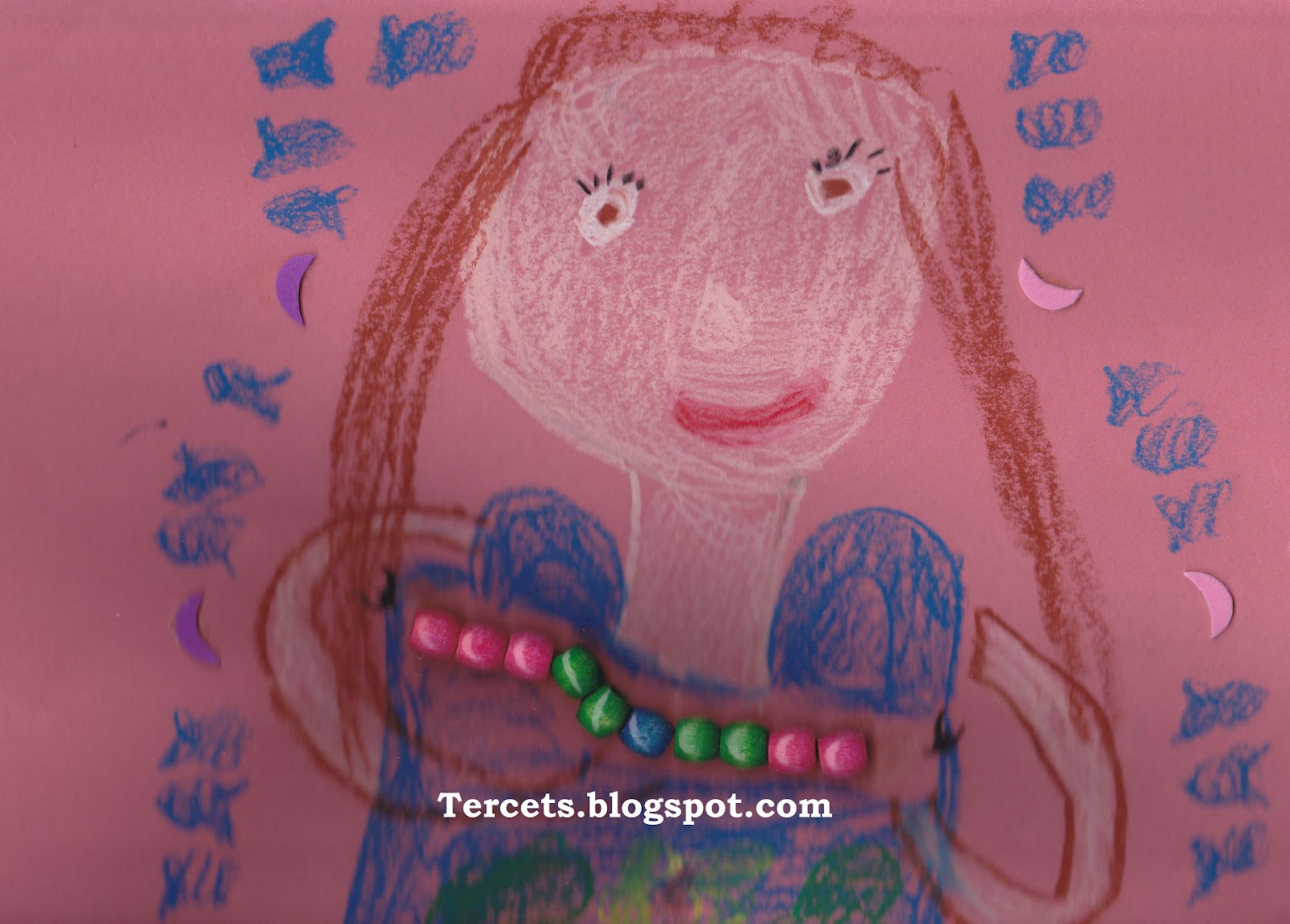
One of my favorite ways to encourage creativity in my children is to let them loose with art materials and see what they design.  We have an art box that we started a few years ago after seeing them at friends’ houses.  It contains all kinds of art supplies and tools: papers, stickers, beads, yarn, glitter, etc.  We get it out whenever we need things for a specific project, but also for unstructured art time.  My daughters use their imaginations and find new ways to combine materials.  


Sometimes, they go wild and really push the limits of their creative thinking; other times, they just draw or use stickers.   


Either way, they are having fun and nurturing their imaginations.  As a creative person myself, I hope they will also use their creativity as adults, but even if they don’t, I know they’ll benefit from learning to think in non-linear ways.

Want to start your own art box?  Chances are, you have lots of stuff already: crayons, markers, papers of many colors, stickers, cardboard (paper towel rolls are great), cotton balls, etc.  Buy other stuff when you find it on sale, and add leftover materials from other projects.  Viola: art box!  We keep pencil boxes of basic materials (crayons, scissors, glue, markers) in several rooms in the house, within reach so my daughters can create whenever inspiration strikes.

Read this post to learn how we use items from the art box for a craft project.

I have attached this post to Laura’s Fantastic Ideas for Summer Fun Link up over at Come Together Kids.  This on-going link up already has over 200 ideas for summer projects and activities.  I know I’ll be going over often to find inspiration for creative time with my children; I hope you find something fun when you visit.


Wednesday, June 1, 2011

Growing Your Own

One way to add more fresh, organic, and locally grown food to your diet is to grow some of it yourself. My father planted a garden most years when I was growing up, and I have done the same most of my adult life. This activity is more than a family tradition; it’s a way to teach my children how people need and depend on the earth, how to be good stewards of the planet, and how to provide for our basic needs. Each of these lessons can be learned in other ways, but gardening is active hands-on learning, the kind of learning you are likely to remember for a long time. I haven’t forgotten the gardens of my childhood: the cherry tomatoes that overflowed one year, or the carrots that would only grow the size of our thumbs.

Even if you don’t have land to plant on, you can grow herbs in pots, or seek out community gardens and exchange your labor for a share of the harvest. I’ve seen the topsy turvy hanging planters for sale everywhere this year. We even bought a hanging bag to grow strawberries from a school fundraiser, but haven’t tried it yet. I’ll let you know if that works out in a future post.

This weekend, I weeded our garden and my daughters helped me harvest. We garden organically, so the weeds must be pulled, the ripening fruits checked for bug and worm damage, and the affected ones removed to prevent future problems. I had weeded half the garden last week, so things moved at a good pace. I find weeding to be a good use of my time. It requires concentration, so it clears my mind of all the problems I’ve been thinking about, and I can see the progress I make as I go. I do not get the same sense of accomplishment from other repetitive tasks as I do from seeing the garden cleared of weeds.

Then, nothing is more satisfying than harvesting and eating what you’ve grown. In the picture below, you can see our bounty for the week: roma tomatoes, romaine lettuce, rosemary, mint, and oregano. 

Two days later, the tomatoes, most of the lettuce, and some oregano have been eaten. Some of the mint is brewing sun tea as I type, but we are still enjoying the rest of the herbs as a bouquet. 

The idea to make an herb bouquet came from my friend Alice, who used some herbs with wildflowers in the wonderful arrangements she made for my wedding. I enjoy the aroma of herb bouquets, and they make the herbs easily available for cooking use. Also, many herbs have medicinal properties; for example, the essential oils of both rosemary and oregano are antiviral, antibacterial, and immune stimulating. When someone in my family is sick, I place herb bouquets throughout the house to clean the air, promote healing, and strengthen our immune response. More about the medicinal uses of herbs in a future post.

I want to hear from you; what are you growing? What would you grow if you could?

Thursday, May 26, 2011

Everyday Activism

I practice activism every day. To me, activism includes a range of behaviors intended to change society for the better, from the street protests of people living in Tunisia, Egypt, Libya, Syria, Yemen, and Spain these last few months, to writing letters to your government representatives, to making choices about how to spend your time and your money. When you think about your choices as activism, it is easy to be an activist every day.

One of the required assignments in the Introduction to Women’s Studies course that I teach is what I call the Advocacy or Activism Project. I ask students to choose a topic related to women’s studies or feminism and educate an audience outside of our class about the topic. This assignment places them in their community and gives them a chance to be activists. They don’t have to wait outside The White House all day in the cold rain holding signs for the president to see like the suffragists, or protest outside the Miss America pageant like the second wavers, or even write letters to congress asking them to renew funding for the Violence Against Women Act. They can just research a topic that interests them and tell their friends about it. They can even use social media to do it. Activism made easy.

One of the last things I tell students every semester is that teaching the course is one of the ways I am an activist. Women’s Studies is about looking at society’s practices in a way that suggests there is room for improvement in order for all members of our community to reach equality. Feminists do not accept the status quo; neither do other activists. At the end of every semester, I have taught 70 students how to be every day activists. When they see a need to practice activism, they will be confident that they can contribute.

I am also an activist in many other ways. When I publish poems about the experiences of the women in my family, I am an activist for including the stories of women, particularly Mexican-American women, in our cultural knowledge and our state’s heritage and history. When I show my daughters what I have published and talk to them about my teaching, I show them that women can make choices to be mothers and/or workers and/or cultural producers. There are many more activist moments in my life, which I will write about in future posts. Writing this blog is also a form of activism (see the last post about eating for health).

So, now I ask: How are you an activist? Are you surprised by the answer?

Tuesday, May 24, 2011

What I’ve Learned About Eating for Health

My husband’s uncle and other family members are visiting Houston while the uncle is tested at MD Anderson Cancer Center following a cancer diagnosis by his physician. Whenever I learn about a family member’s or friend’s cancer diagnosis, I think about all the other times I’ve heard this news. Because both of my parents come from large families, I have a very large extended family, and I have heard about their cancer diagnoses and those of friends too many times to count. Cancers of all kinds have touched people I care about, taken the lives of some, and contributed to the deaths of others due to complications following surgeries and therapies. I have always been interested in eating in a healthy way, but several years ago, I began researching this intently, hoping to find a way to prevent future cancer diagnoses for my children, since they seem to have inherited a susceptibility. Here is what I’ve learned.

  • eat mostly plant foods, a large variety as close to their natural state as possible
  • eat fermented foods (yogurt, kefir, sauerkraut, etc.)
  • avoid conventional produce and animal foods (choose organic & grass fed if you eat animal meats, dairy, or eggs)
  • choose wild caught fish and seafood over farm raised (careful: some species are contaminated by pollutants)
  • avoid most processed foods (stuff that comes in boxes, bottles, cans, and bags)
  • sugar debilitates the immune system and encourages cancer growth

Little by little, I have been changing my family’s diet to incorporate these suggestions. It hasn’t been easy for a number of reasons. Obviously, a fresh plant based meal that includes raw and/or fermented foods and avoids processed items takes time to plan and prepare. Organic products often cost more than conventional ones. Sometimes, my family is reluctant to try a new dish, or asks me not to make it again. Yet, I have persevered. I’ll post my ongoing efforts from time to time. If you wish to suggest the topic of a future post based on the list above, please let me know in the comments section. Whichever topic gets the most requests will appear first. Or, maybe I’ll just have to share my plans to create more fermented foods right in my kitchen (yes, I already make my own yogurt)!

Perhaps you already know about the bullet points above, or maybe you are as surprised as my students are when I talk to them about this. Here is some good news: the diet described above can also keep you healthy in general and protect you from chronic and age related diseases. If you are interested in reading more, here is a list of some of the books I have learned from:


Related Posts Plugin for WordPress, Blogger...